Chasing ratings

When creating something, the problem with following ratings, clicks, likes, engagement online is that it has its own set of rules to win – it is its own game, in and of itself. When the art of popularity is refined, it usually (always?) becomes a race to the bottom to appeal to the most people. This distracts you from the real task at hand – making something cool.

Creating something authentic and original – whether it is a book, an experience in a BnB,  a song – means that it will not appeal to everyone. By definition. This is ok.

Instead we must double down on the people we want to please, who matter to you and whom you want to engage with your art.

I don’t think you can possibly matter to everyone. We must stop chasing ratings for ratings sake.

Album Covers

So I am up early due to baby-screaming-in-the-night syndrome. It’s a tricky syndrome to manage… I have taken the “Stuff it let’s just get up at 430am” approach.

But I digress.

I have been thinking about album covers and how important they are still. Even without the physical album, digital streaming is enhanced by the album artwork and the information traditionally contained within the album cover. It’s all about the Metadata.

With a surplus of information, the trick is collation and turning chaos into a neat package to sell to folks. There is a premium for turning your messy downloads and MP3s into a cohesive library that looks beautiful. For proof – check out this product: https://roonlabs.com/

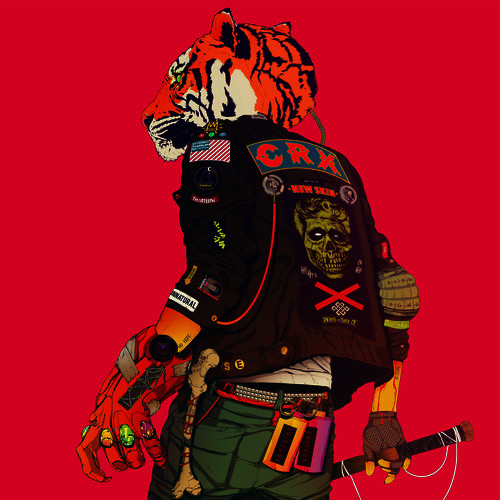
Besides, who wouldn’t want to look at a Tiger in a leather jacket while listening to CRX? Happy Tuesday!

album

Publish something – it’s good for you

Publishing is good for you. It’s like an apple a day.

I have decided to take the publishing process from blogging, and apply it to my ‘day job’. It’s getting me really excited about work and play.

Marketing my supply chain risk assessment services online is essentially like writing a more technical blog, and searching for people who may be interested to read it is like an easter egg hunt. Don’t worry I would never subject you to that writing on this blog! My point is that the process is valuable and can be applied to many situations.

Everyone should publish something. It doesn’t matter what it is, because the longer you do it, the better you will get at writing. Publish ideas regularly enough and it will become a database of thoughts to throw at any given situation. That is a remarkably valuable and powerful thing.

Surround yourself with good stuff

The reality of becoming focused and creative is that you have to push other things to the side and stay attached to the important task at hand.

A big part of this is choosing what and who you listen to and stopping what doesn’t work.

For me, what works is podcasts and newsletters from interesting, creative people. For me, what works is stopping social networks from using me, and starting to use them for my own purposes instead (I really had to think about this and make a strategy – basically I only engage with Facebook, and I curate this actively every time I log on. I use Twitter as purely a feed for this blog. I use Linkedin purey as a CV for my day job. No other social networking for me.) I need good music in my life and I need to look forward to things that inspire me like family and friends and home.

Lastly and most importantly, I need to use time available to me. Life fill up the hours without much effort. When I get time to write, I take it actively. Adequate time spent writing, and adequate repetition of the writing process will make me a good writer.

What do you need to surround yourself with to become creative?


Just a little more

It’s strange how some things stick and others fall by the wayside. Creativity is hampered by the half-baked efforts which lead nowhere.

If the end goal of a perfect novel or song is not reached from the start we can lose confidence.

If space is not made for creative efforts, we will never have the time.

However, if we can be patient, and have faith and keep trying for just a little more each day, doing something creative over and over, we will get better. I have seen it happen with my own eyes with an artist friend of mine. We will get confident and we will get creative and we will get good.

Any problem you have…

…is probably fixable.

Think about it. Humans have cured polio. We discovered bacteria. We put people on the moon. We have cell phones which are as sci-fi as you can imagine. They let me talk to someone in China…if I so choose. So progress happens if we want it to, but it is not automatic.

In my personal experience, I am learning that there are two key components of creativity and progress.

First, I have to accept that progress will bring with it unintended consequences. These can be positive: For example back in the day we learned about atmospheric pressure which allowed us to create vacuums which allowed us to create combustion engines to push trains down a track. But they can also be negative: those combustion engines spit out pollution of all sorts. Personally, to become more creative has led me to quit unsatisfactory jobs, to learn about publishing, marketing and blogging. However it has also led me to become super self-critical. This is good sometimes in a work context, but it can impact other areas of my life. I never expected this as a side-effect.

The key for me is that progress is always better than the alternative, which is stagnation. It is a truth which I have had to get my head around. Stagnation is easier but far more destructive to my life. I think this applies universally to our race.

Next, for progress to occur, there needs to be focus. This may be internal – are you sure of what you are trying to achieve? Are you putting in the time and work? Or it may be a matter of collaboration. Do you have another person who will help you progress? I am learning that focus essentially means aligning of habits and habitual behaviour. Mine were all out of whack before I chose to be more creative.

I find it comforting that there are broad rules and conditions for progress. It helps my creativity and keeps pushing me on to fix problems each day. What helps you make progress?

Sci-Fi @home

I see how great sci-fi books take inspiration from everyday events. It’s a whacky world we live in.

Take this alien looking plant for example. From a few saggy leaves it is now in bloom and has pods exploding every few days:

photo-on-2016-11-25-at-5-31-am-2

Expect a public service announcement that the invasion has started. Started in my kitchen.


Tribal Inspirations

I heard a New York Times podcast yesterday all about A Tribe Called Quest’s latest album. Interviews with the band revealed a nugget of creativity wisdom. A kernel of truthiness to get the creative juices-a-flowing, a rough rock from where you may extract sparkling creative jewels, a …you get the point.

Q Tip – philosopher that he is – offered something along the lines of the following statement: “An idea inside your head is just a thought until you act on it.”

I like this. Ideas are fantastic, important, a vital starting point for creating something. But until some sort of action (writing, painting, dancing, rapping) occurs – there is no art, and it’s just a ghost in your head. Nobody would know about it. Nobody cares. Nothing happens.

So we must do. And that is the scary part because it means others may bear witness to the doing. And others may not like the doing.

On the other hand, they may like it very much. It might just work.

Undermined

On any given day, the number of forces which can undermine your creative efforts is vast.

A woman’s day can be made miserable by a sore back.

A friend can spoil your mood.

A previous engagement can fill your time so that nothing else is possible.

A baby can keep you awake all night.

Politics and news headlines can depress you right back into bed.

Most of these however, are fixable. Investing time and money and effort into steering your life towards a creative space requires a bit of a plan. A plan that is repeated and refined eventually becomes the norm. Norms eventually become bulletproof to interruption. (That’s my plan anyways…in a nutshell).

Van Gogh managed a masterpiece with one ear missing – how bad can your obstruction of creativity really be?


Telling ourselves stories

By definition, creativity is required to make art. To write something interesting needs a creative process behind it. This fact has led to some of the most seductive thinking of the modern era. Specifically, we tell ourselves stories that not everyone is able to be creative, therefore not everyone is able to make art. Many believe that the artist’s life is only available to a select few, that the left brain needs to over-rule the right for optimal creative conditions. The story bends even further. Even when optimal conditions are met and a person is ‘an artist’, their output can be slowed by external factors too – writer’s block sets in.

We would have ourselves believe that most, if not all of the creative process is out of our control. As I have written before, I don’t believe this at all. Unfortunately life is not so simple. Although creativity shows up in the brain in certain ways, “contrary to the “left-brain, right-brain” myth, creativity doesn’t just involve a single brain region or even a single side of the brain. Instead, the creative process draws on the whole brain. It’s a dynamic interplay of many different brain regions, emotions, and our unconscious and conscious processing systems”(quoted from an interesting article on the brain and creativity which can be found here).

Rather than the ‘artist’s life’ only being available to a select few, the truth is that we decide our fate. And how do we do that? Why, with our memories of course.

Events in our lives are either held onto as memories which become narratives affecting our behaviour, or they are forgotten.

For a crude example: Twin girls are told to write a story for homework. The one gets frustrated during the writing and gets a bad mark. She decides she is never going to try hard to write again. She blocks it from her brain. The other also gets frustrated and gets a bad mark, but decides she is creative and will find a way to improve the mark next time. These decisions lead to chains of other decisions which reinforce our own narratives. From that moment on the first girl focusses on science, the other on literature. Two different lives are born.

The kicker in all of this is that you can decide which memories to hold on to and which to let go of. Which memories will become a narrative and which fade to black? You can tell yourself a different story and you can become more creative.